The best time to post on TikTok: why the two biggest studies disagree
· 5 min read
Two of the largest posting-time studies published in 2026 reach opposite conclusions. That disagreement is the most useful thing in the data: it tells you the answer depends on your audience, not on a universal hour.
The two studies, side by side
Both studies are big, both are recent, and they do not agree:
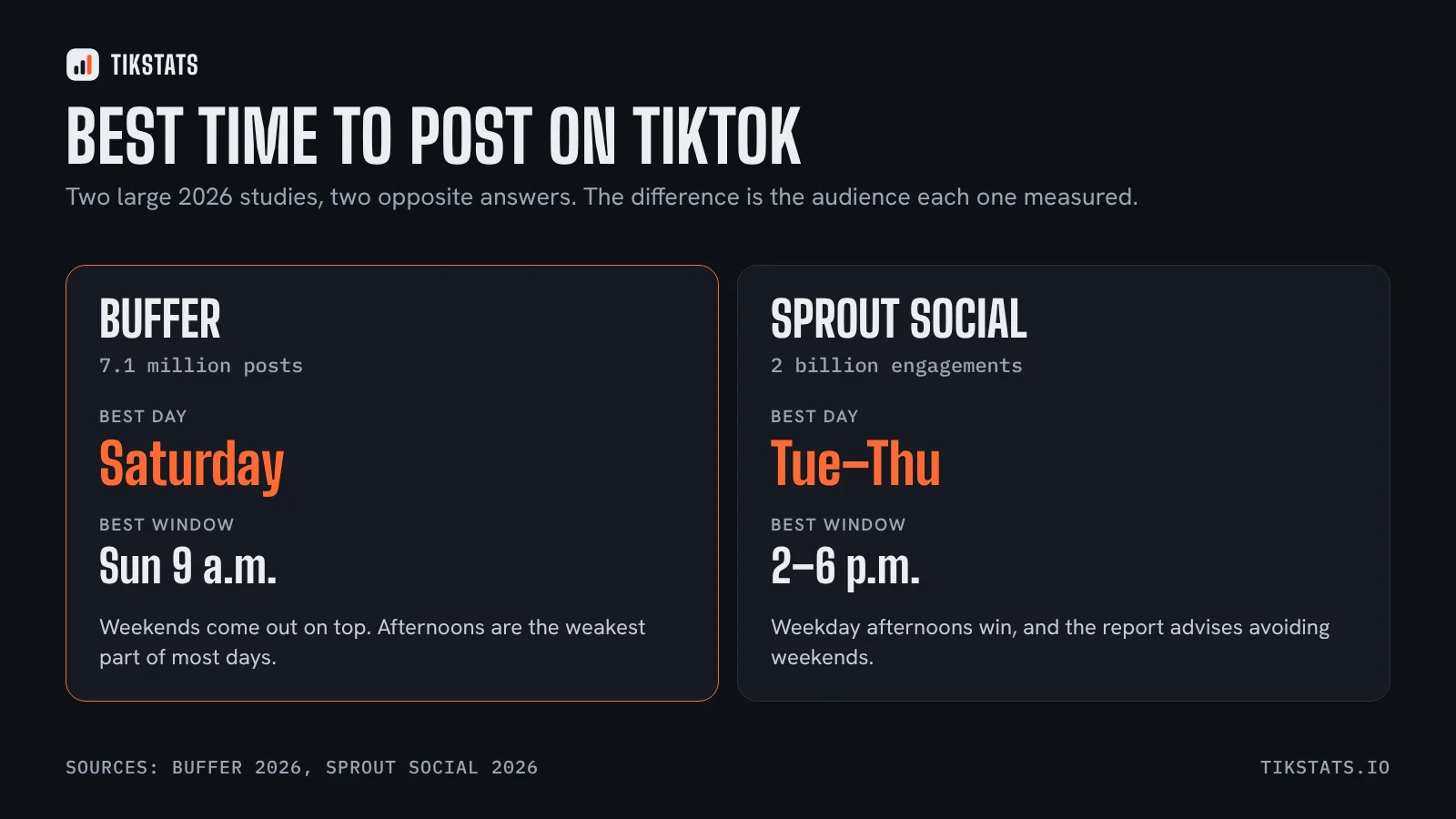
- Buffer analysed 7.1 million TikTok posts published through its tool and ranked them by median engagement rate. Its best single slot is Sunday at 9 a.m., followed by Monday at 1 p.m., and Saturday comes out as the strongest day overall.
- Sprout Social built its 2026 report on close to 2 billion engagements across roughly 307,000 profiles. Its answer is Tuesday to Thursday, 2 to 6 p.m., and it advises avoiding weekends.
One study's best window is the other study's worst. Neither is wrong; they simply watched different accounts. Buffer's data comes from the small creators and businesses who schedule through Buffer. Sprout's comes mostly from larger brand profiles with a different audience and a different posting rhythm.
What they do agree on
- Timing moves the numbers by a few percent, not by a factor of two. No hour will save a video nobody wants to watch.
- The first minutes matter more than the hour. A video that gets reactions quickly is shown to more people.
- Your own audience beats any study. Both reports end with the same advice: look at your own data.
That last point is the one worth acting on. A study tells you what happens on average across hundreds of thousands of accounts. Your account is not the average.
How to find your own best hour
Two sources, and they complement each other.
Inside the app, TikTok Studio has a Followers tab that shows the hours when your followers are active. It is the only place that data exists, and it is free.
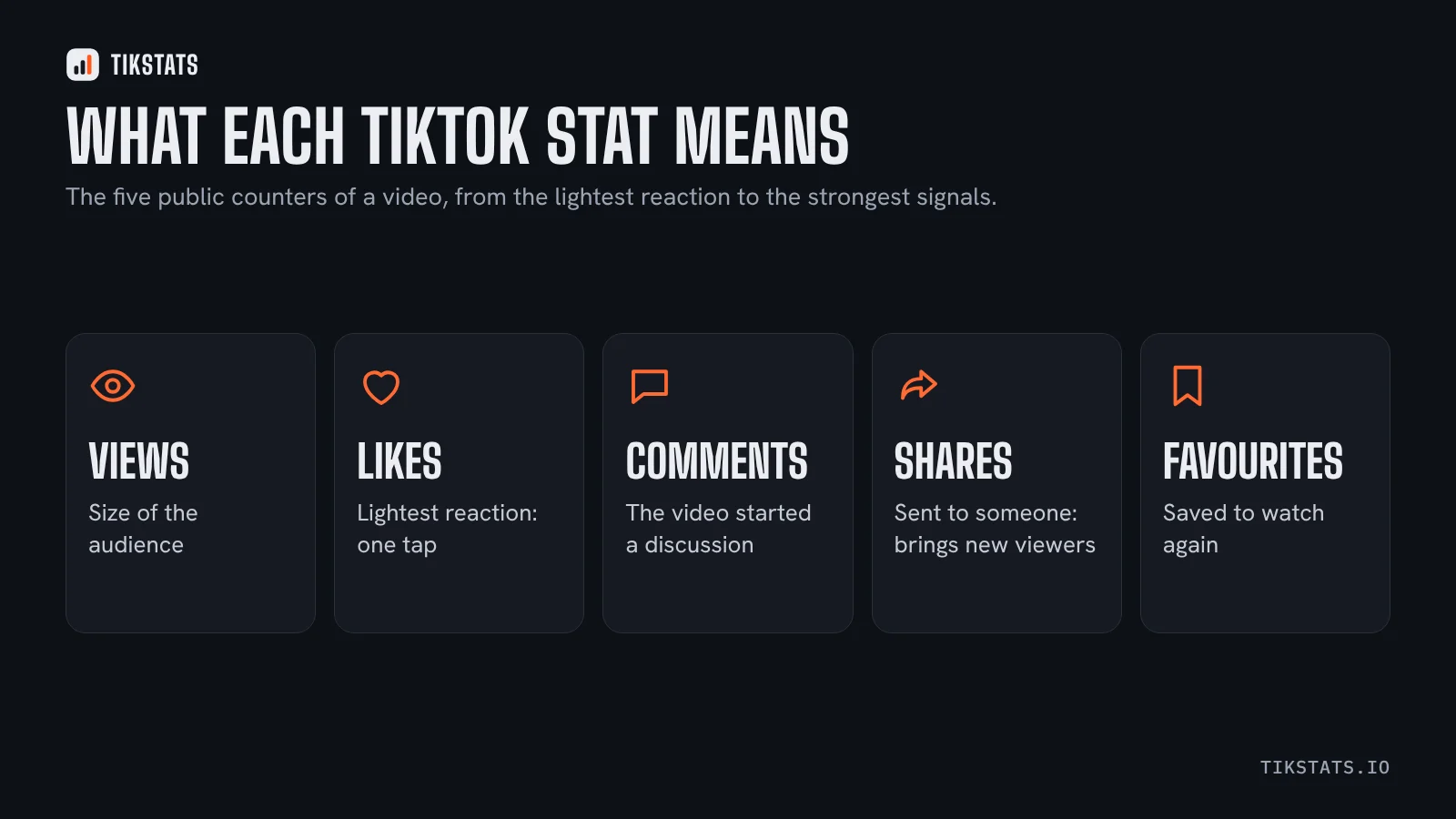
Outside the app, the speed of a video tells you whether the start was good. TikStats shows views per hour since posting for any public video, so you can compare a video posted on Sunday morning with one posted on Wednesday evening on the same scale. Paste a link on the home page and look at the velocity figure, or install the Chrome extension to see it on every video without copying anything.
A simple test that actually answers the question
- Pick two slots far apart, for example Sunday 9 a.m. and Wednesday 6 p.m.
- Post four videos in each slot over two weeks, with comparable content.
- Compare views per hour in the first 24 hours, not the final view count. Final views are polluted by videos that take off days later.
- Keep the better slot, then test it against a third one.
Eight videos is not a scientific sample, but it is your audience rather than someone else's. After two or three rounds you will know more about your own account than any published study can tell you.
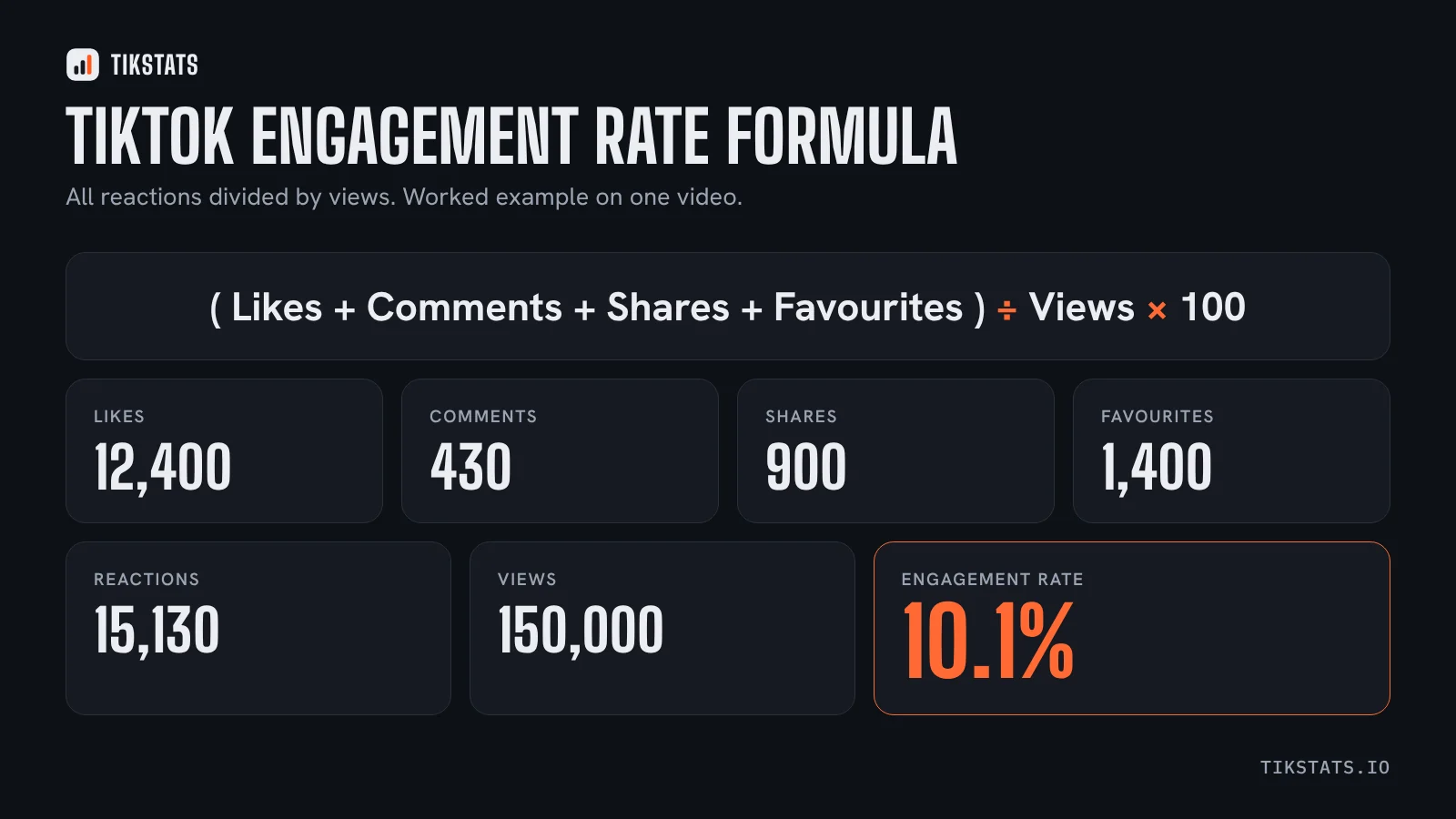
If you want the engagement side of the same picture, the engagement calculator gives you the rate of each video in a second, and this guide explains what a good rate looks like in 2026.
Frequently asked questions
What is the best time to post on TikTok?
There is no universal answer. Buffer's 2026 study of 7.1 million posts points to Sunday morning and Saturday, while Sprout Social's points to Tuesday to Thursday between 2 and 6 p.m. Your own follower activity beats both.
Does posting time really matter on TikTok?
It moves results by a few percent, not by a factor of two. What a video is and how fast it gets its first reactions matter more.
How do I find my own best posting time?
TikTok Studio shows when your followers are active. Then compare views per hour between videos posted in different slots.