Views per hour: the one public number that shows how a video started
· 5 min read
Two videos end the week at 80,000 views. One got there in six hours, the other in five days. They are not the same video, and only one of them tells you to make more like it.
What velocity is
Views per hour is simply the view count divided by the hours since posting. It is crude, and it is still the most informative public number available, because it describes the start of a video's life rather than its total.
The start is what the recommendation system controls. A video that gathers views quickly is being shown to people; a video that creeps is not. This article covers what TikTok says about how that distribution works.
Reading the three shapes
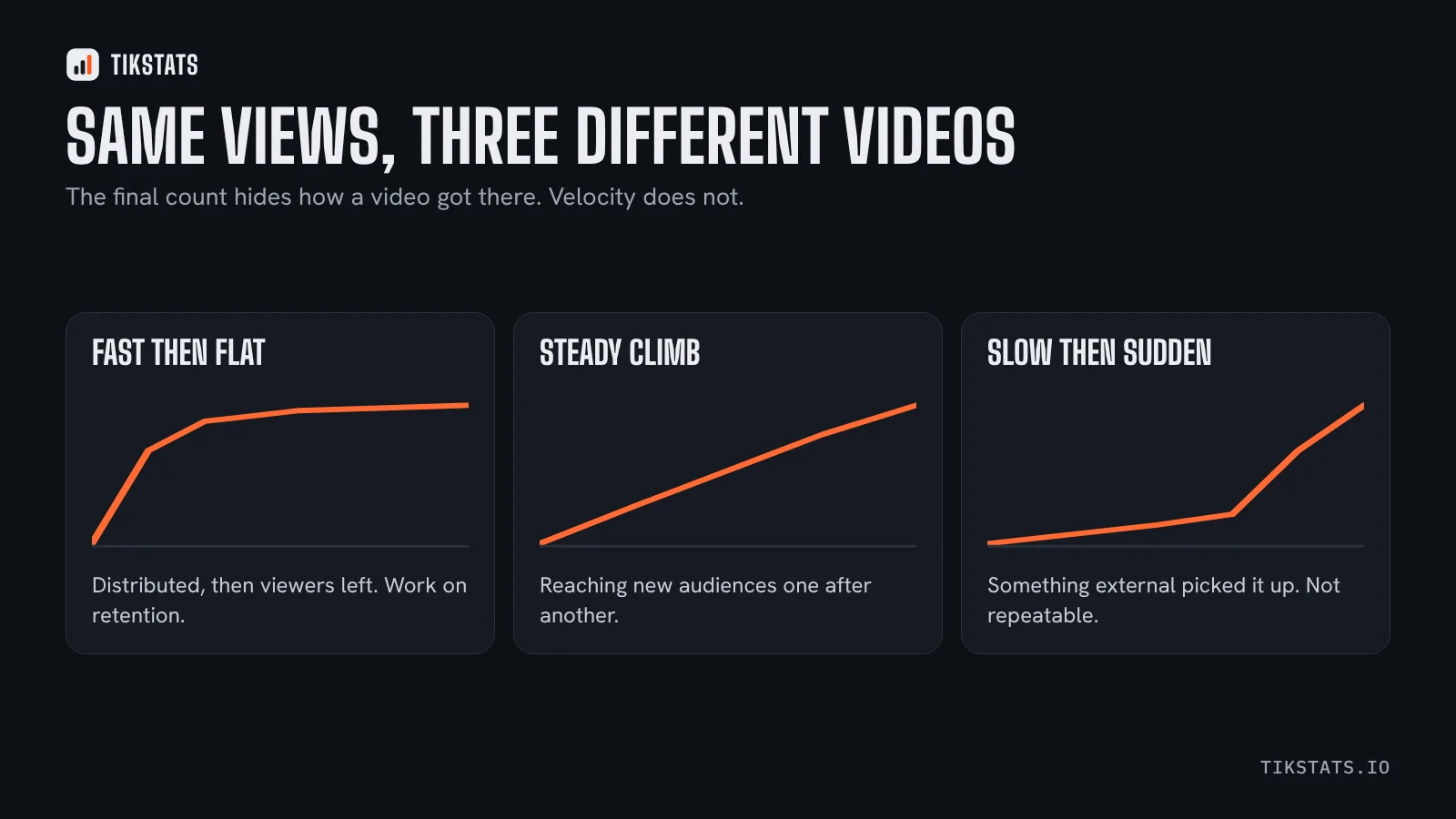
- Fast then flat: the system pushed it, viewers did not stay. Work on retention, not on reach.
- A steady climb: the video is being distributed to successive audiences. This is what a working video looks like.
- Slow then sudden: something external picked it up, a comment thread, a share, a trend catching up. Rare, and not repeatable on purpose.
A fourth shape, flat from the beginning, is covered in this checklist.
Why the final count misleads
Final view counts mix together distribution, luck and time. A video posted three weeks ago has had three weeks to accumulate. Comparing it with yesterday's video rewards age, not quality.
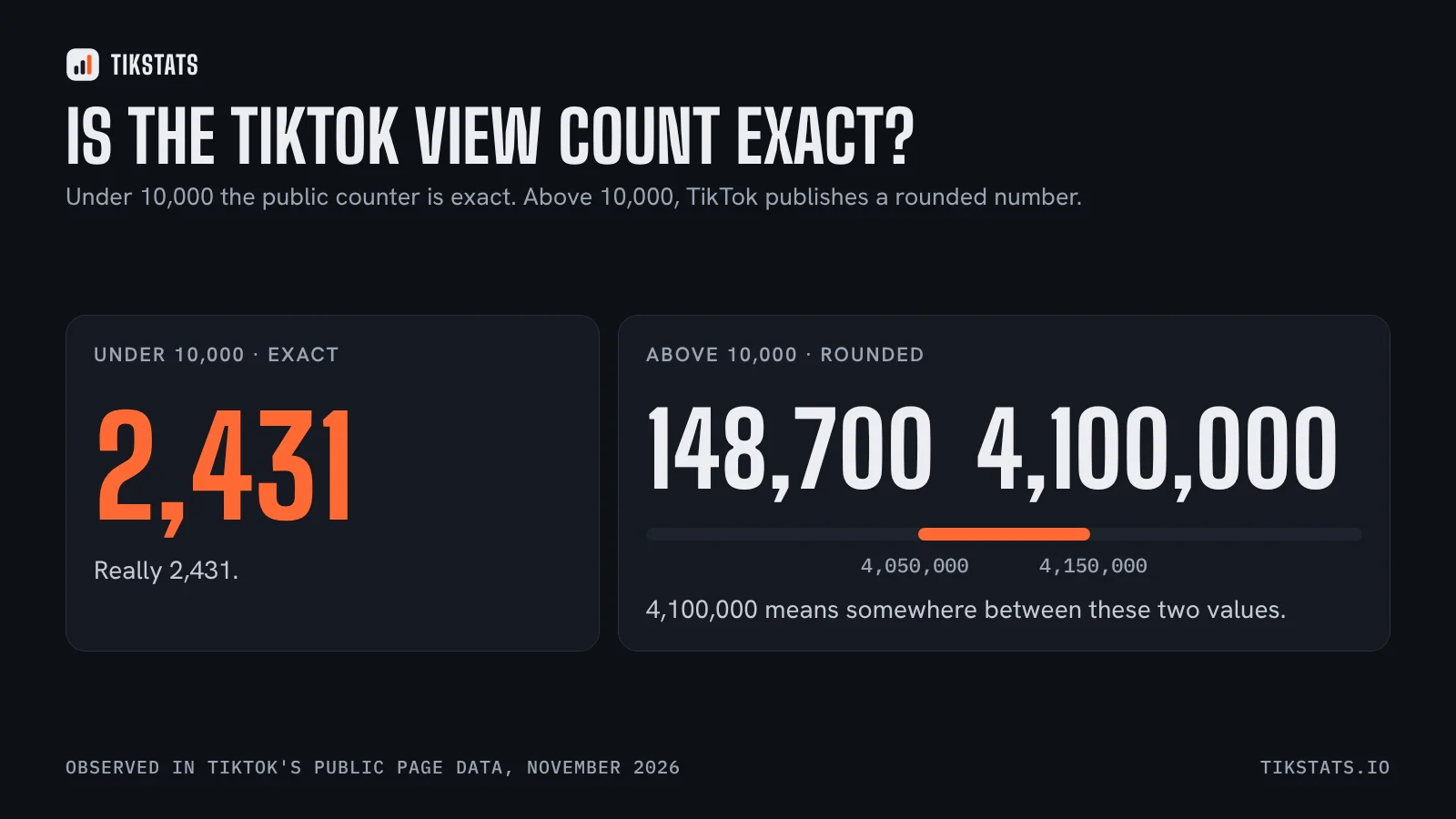
There is a second problem specific to TikTok: above 10,000 the public counter is rounded, so the difference between two videos can be invisible. This article explains the rounding and what it costs you.
Velocity reduces both problems, because you compare videos at the same age rather than at the same date.
How to use it in practice
Pick a window and stick to it: views per hour over the first 24 hours is the usual choice, because it covers the distribution phase without dragging in the long tail.
Then use it for every comparison you make: short against long videos, one posting slot against another, a hook that worked against one that did not. It is the measure that makes those tests comparable at all.
TikStats computes it for any public video, yours or not. Paste a link on the home page, or install the Chrome extension to see it on every video in a profile without copying anything.
Its limits, stated plainly
Velocity does not tell you why. A slow video and a video nobody finished look different, but a fast video with bad retention and a fast video with good retention look identical until you open TikTok Studio.
It also degrades with age. After a few days, dividing by hours flattens everything, which is why the first-day figure is the one worth recording.
Use it as the first question, not the only one: did this video get distributed? Then move to engagement, which this guide breaks down reaction by reaction.
Frequently asked questions
What is a good views per hour on TikTok?
There is no universal figure. It is useful as a comparison between your own videos at the same age, not as an absolute target.
Why not just look at total views?
Total views mix distribution, luck and time. A three-week-old video has had three weeks to accumulate; comparing it with yesterday's rewards age, not quality.
Can I see views per hour for someone else's video?
Yes. It is worked out from the public view count and the posting date, both of which are public.