Use transcripts to work out why the first three seconds worked
· 6 min read
Everyone says the first three seconds matter. Almost nobody writes down what was actually said in them. A transcript turns a vague impression into a line of text you can compare with twenty others.
The method, in four steps
- Pick ten videos that performed well in your niche, your own or other people's.
- Get the transcript of each one and copy only the first sentence.
- Put the ten opening lines in one list, with the views per hour of each video next to them.
- Read the list. The pattern is usually obvious once the words are side by side.
This takes about fifteen minutes. The transcript tool gives you the text from a link, and the Chrome extension does it without leaving TikTok, which matters when you are going through ten videos.
What you are looking for
Openings fall into a small number of shapes, and most niches have one that dominates:
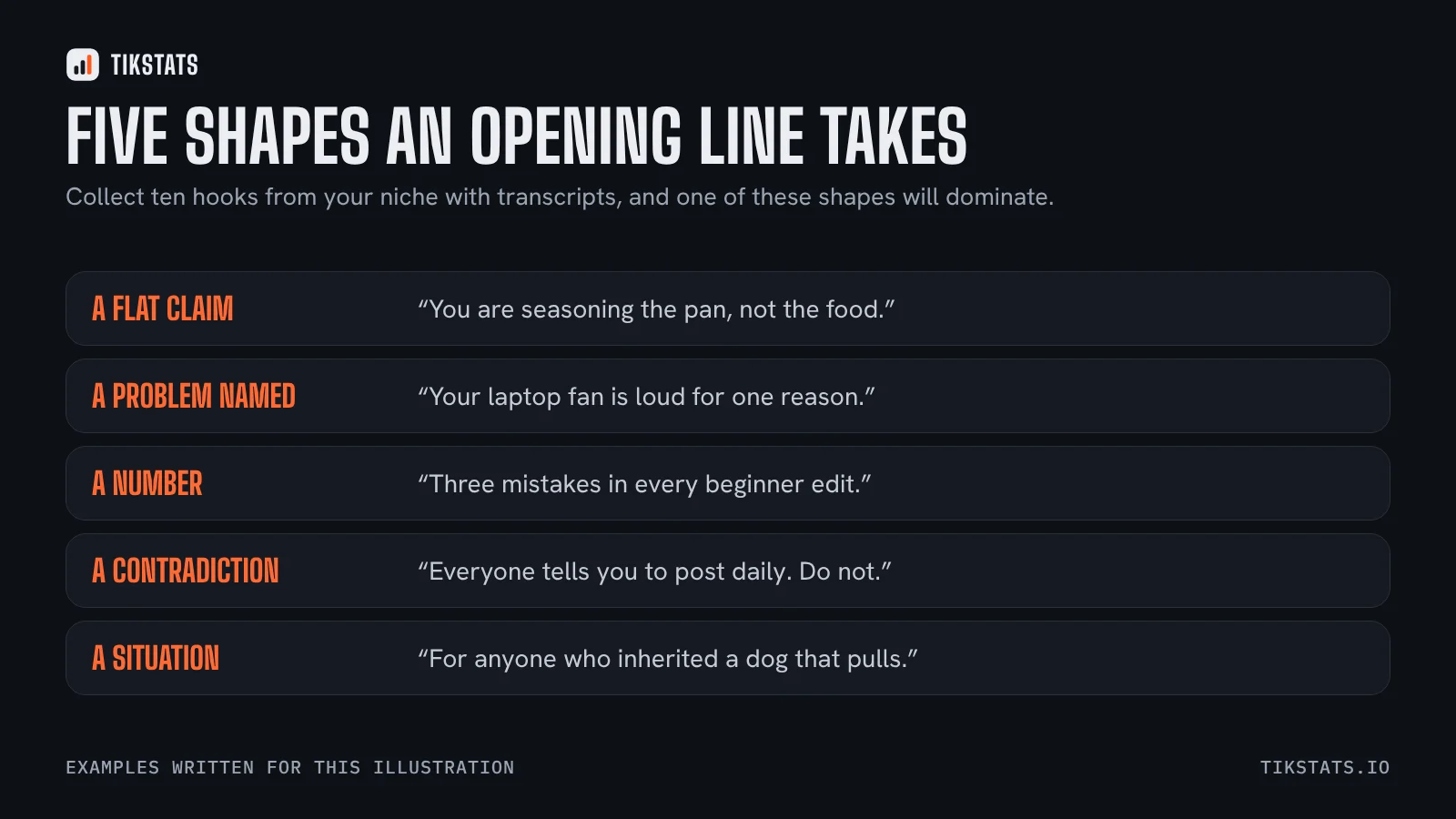
- A claim stated flatly, with no preamble.
- A problem named in the viewer's own words.
- A number that promises a shape: three things, two mistakes.
- A contradiction of advice the viewer has heard before.
- A situation described so precisely that the right person recognises themselves.
What you will not find in a successful hook: a greeting, an introduction, or an explanation of what the video is about to do.
Pair the words with a number
A hook that sounds good is not the same as a hook that worked. Put views per hour next to each line so you are ranking by evidence rather than taste.
Views per hour is the right measure here because it reflects the start of the video's life, which is exactly what a hook controls. Final view count is polluted by everything that happened afterwards. TikStats shows it for any public video on the home page.
Engagement tells you a different thing: whether people cared once they stayed. A strong hook with weak engagement means the opening promised something the rest did not deliver. This guide covers that side.
Turn the list into scripts
Once you have ten opening lines ranked by performance, writing the next one is a much smaller job. Take the shape that dominates, fill it with your own subject, and keep the rhythm of the originals: short words, no warm-up, the point in the first breath.
A list of ten real hooks from your own niche is also the most useful thing you can hand to an AI writing assistant. Give it the lines, the numbers next to them, and ask for variations on the shape that worked, not generic ideas.
Do not copy a hook word for word from someone else's video. Copy the shape, which is not anyone's property, and write your own line.
Why most people skip this
Because getting the text used to be the hard part. Watching ten videos and typing out their first sentences takes an hour and nobody does it twice.
With transcripts it is a copy and paste. That is the whole trick, and it is also the reason a transcript feature belongs in an analytics tool rather than in a separate one. For what each tool in this space actually offers, see this comparison.
Frequently asked questions
What makes a good TikTok hook?
A claim, a problem, a number, a contradiction or a recognisable situation, stated in the first breath. Greetings and introductions do not appear in hooks that work.
How do I study other creators' hooks?
Take ten videos that performed well, get the transcript of each, copy the first sentence, and rank the lines by views per hour.
Can I reuse someone else's hook?
Copy the shape, not the words. The shape belongs to nobody; the sentence belongs to its creator.