Audit your own TikTok profile in twenty minutes
· 6 min read
Most creators look at their last video and feel something about it. An audit is the opposite: twenty videos, four columns, no feelings until the end.
Build the table first
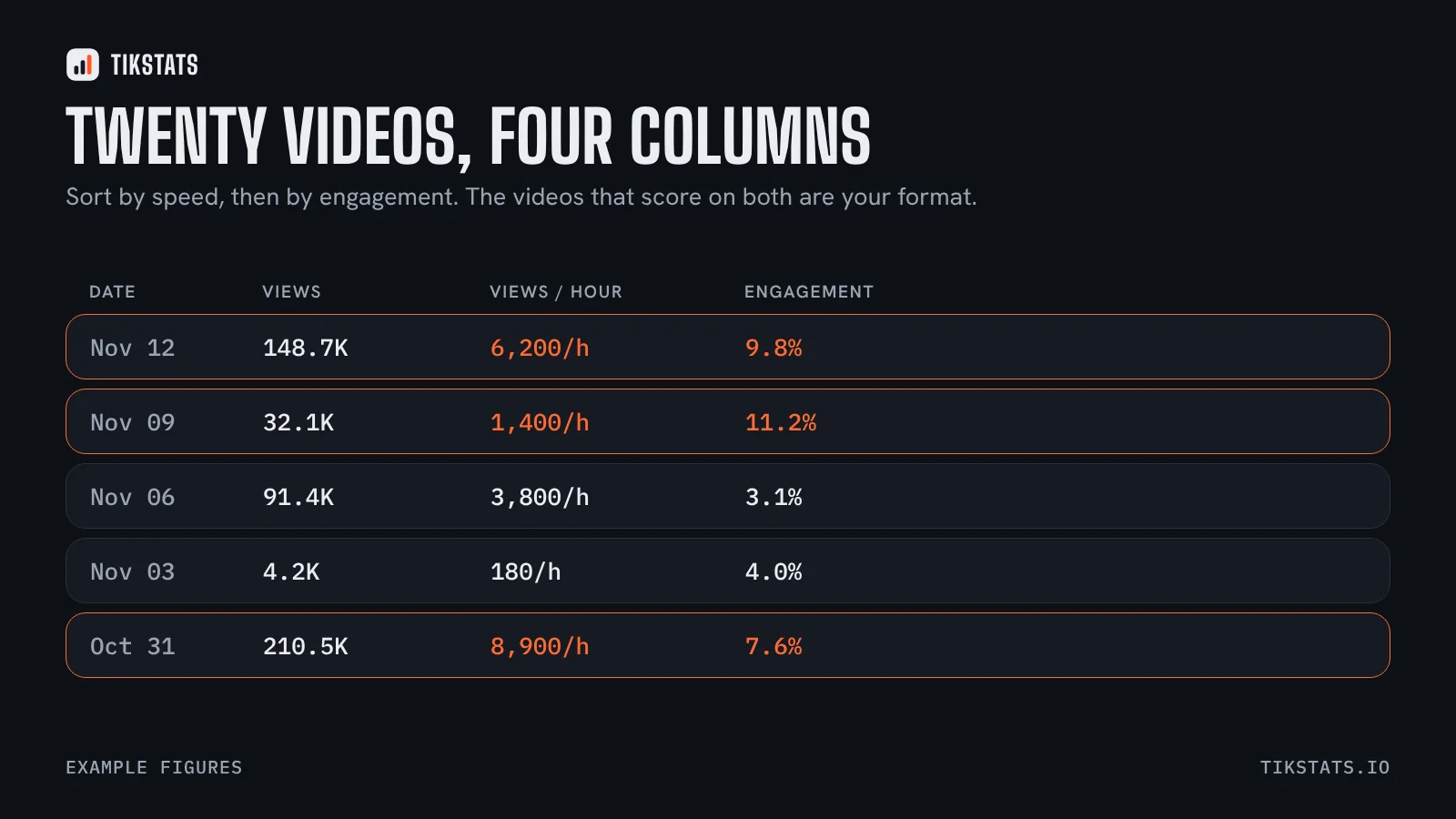
Open a spreadsheet and make one row per video for your last twenty. Four columns are enough to start: date, views, views per hour over the first day, and engagement rate.
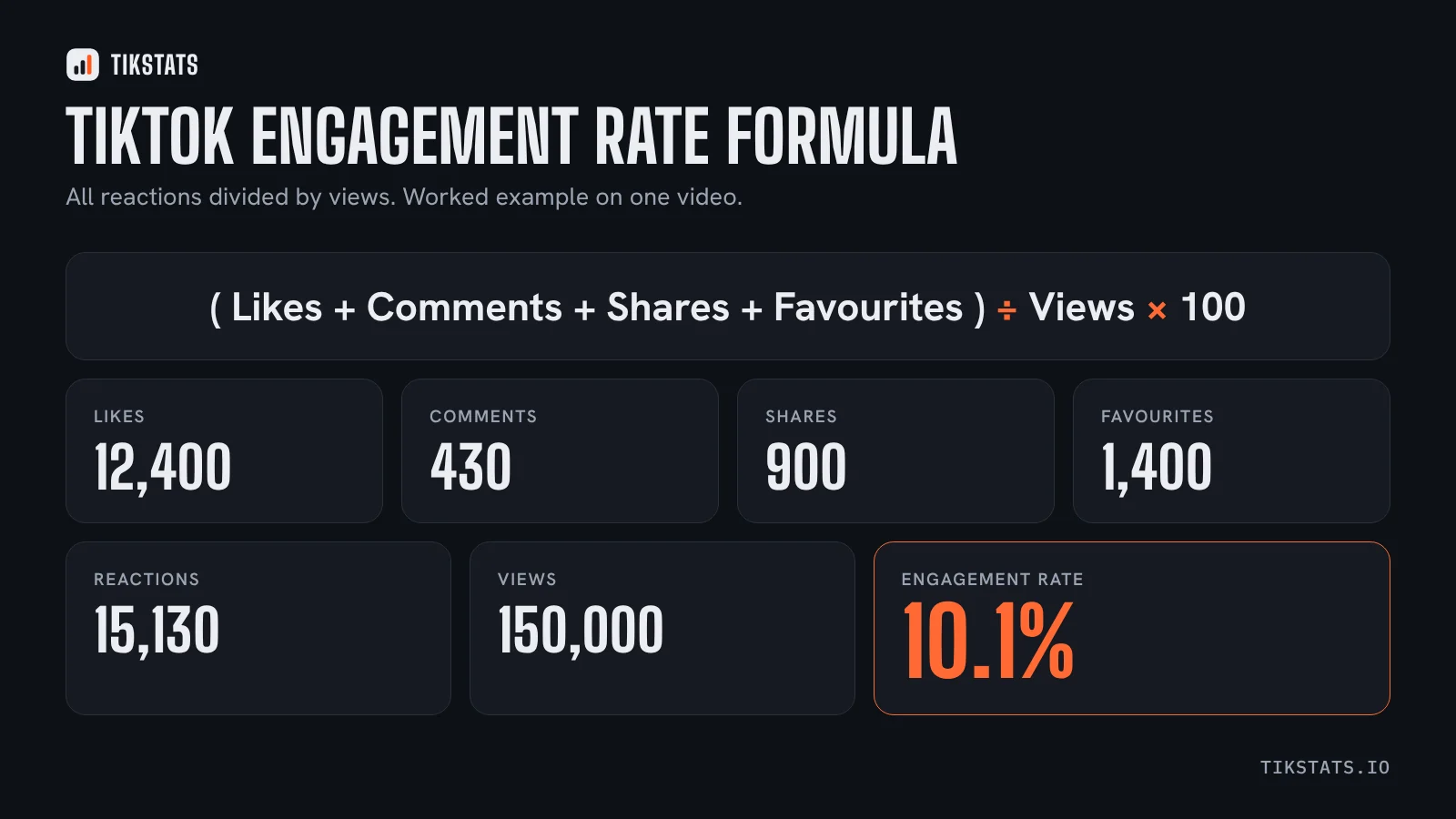
You can fill the last two from public data. The engagement calculator gives the rate from a link, and the Chrome extension shows both figures on each video as you scroll your own profile, which is much faster for twenty rows.
Separate speed from reaction
Sort the table by views per hour and mark the top three. Then sort by engagement rate and mark the top three again. These are usually not the same videos, and that is the point.
High speed, low engagement: the subject attracted people who then did not care. Good hook, weak substance.
Low speed, high engagement: the people who found it loved it, but it was not distributed. Usually a packaging problem rather than a content problem.
High on both: this is your format. Make more of it before analysing anything else.
Look at what the winners have in common
Take the three videos that scored on both measures and write down, for each: the subject, the length, the opening sentence, and whether it was a video or a carousel.
Get the transcript of each one and put the three opening lines next to each other, as this article describes. Three is a small sample, but a shared shape is usually visible immediately.
Then do the same for the three worst. What they have in common is more useful than what the winners have, because it is easier to stop doing something than to start.
Check the profile itself, not just the videos
- Does the bio say what someone gets by following, in one line? Most say who the creator is instead.
- Do the first six thumbnails make the subject obvious to someone who has never seen you?
- Is there one pinned video that would convince a stranger?
- Is the link in the bio pointing at something that still exists?
A visitor decides in a few seconds, and they arrive from a video, not from the top of the profile.
Finish with one decision
An audit that ends with ten ideas changes nothing. End it with one: the format you will repeat, and one thing you will stop doing.
Put a date in the calendar four weeks out and run the same table again with the new videos. The comparison between two audits is worth more than either audit on its own.
If the numbers say reach is the problem rather than reaction, this checklist works through the three causes in order.
Audit a profile with the extension
Frequently asked questions
How do I audit my TikTok profile?
Build a table of your last twenty videos with date, views, views per hour in the first day and engagement rate, then sort by each of the last two and look at what the top videos share.
How often should I audit?
Every four weeks. The comparison between two audits is worth more than either one alone.
What should an audit end with?
One decision: the format you will repeat and the one thing you will stop doing.