A monthly TikTok competitor analysis that takes an hour
· 6 min read
Competitor analysis fails when it is a one-off document nobody reads again. Done monthly on five accounts with the same six columns, it becomes the most useful hour in your calendar.
Pick the five accounts once
- Two accounts your size, doing the same thing. These show you what is achievable now.
- Two accounts clearly ahead of you in the same niche. These show you where the format goes.
- One account from a different niche whose style you admire. This is where ideas come from.
Keep the same five for at least six months. The value is in the comparison between months, which you lose if you change the list.
Record six numbers per account
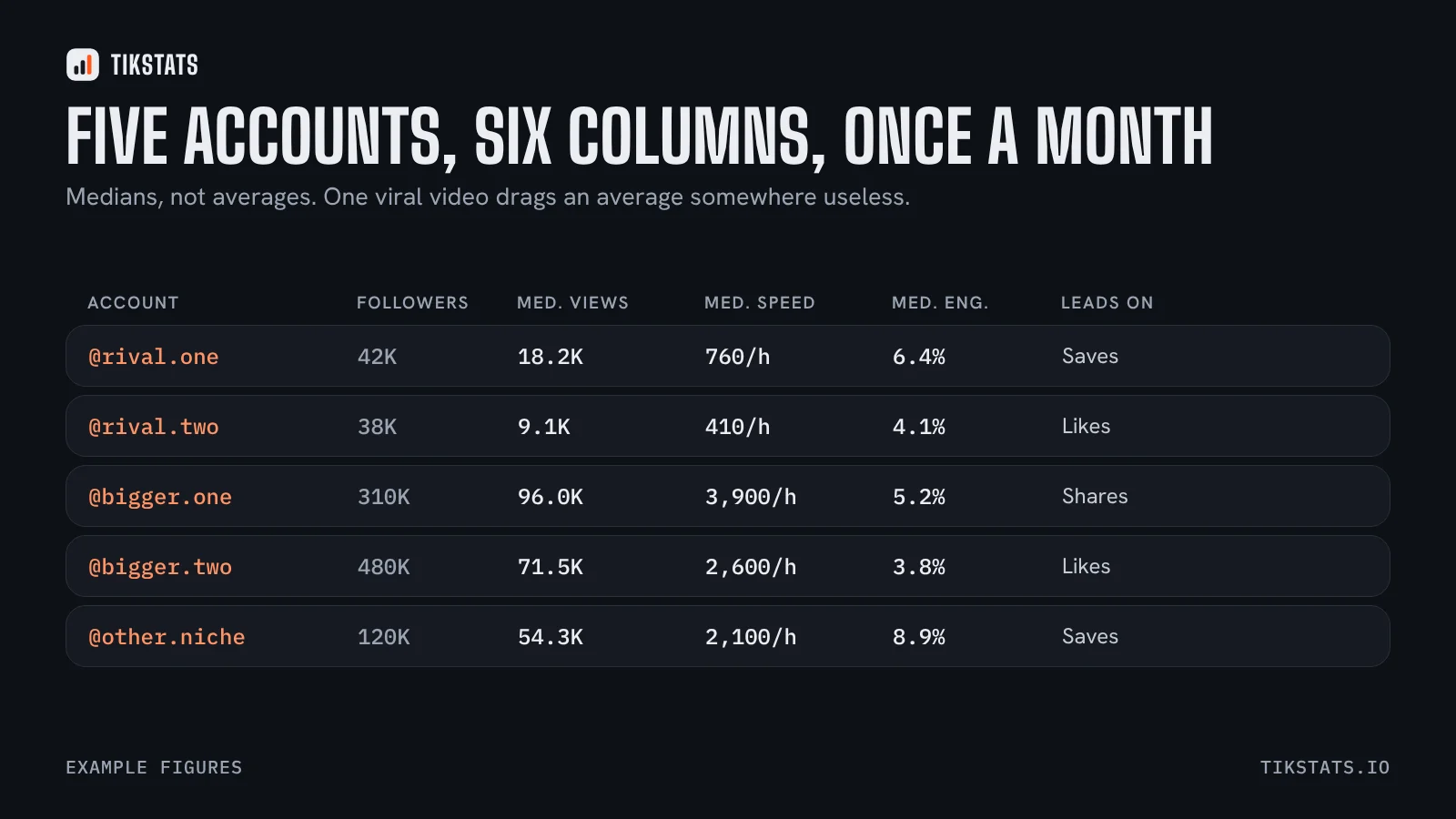
For each account, take their last ten videos and write down: followers, median views, median views per hour, median engagement rate, which reaction leads, and posting frequency.
Medians, not averages. One viral video drags an average somewhere useless.
The Chrome extension is what makes this an hour rather than an afternoon, because the panel follows you down a profile without copying links. From a phone, paste links on the home page instead.
Read the hooks, not the captions
Take the three best-performing videos of each account and get the transcript of each one. Copy only the first sentence into a list.
Fifteen opening lines from accounts that are working in your niche is the single most useful document you can build, and it takes about twenty minutes. This article covers how to read the list once you have it.
Captions are written for the caption field. The spoken opening is what actually held the viewer, and it is public on TikTok in a way it is not on other platforms.
Look for the gap, not the overlap
The temptation is to copy what everyone is doing. The useful finding is usually the opposite: a subject the whole niche ignores, a format nobody uses, a reaction nobody earns.
If all five accounts collect likes and none collect saves, there is a demand for something worth keeping that nobody is meeting. This guide covers which choices move which reaction.
End with one experiment
A competitor analysis that produces a list of observations changes nothing. End it with a single sentence: the one thing you will try before the next review.
Next month, start by looking at whether it worked, using the same columns. Then redo the table. This profile audit is the companion routine for your own account, and they work well run on the same day.
Frequently asked questions
How do I analyse a TikTok competitor?
Take their last ten videos and record median views, median views per hour, median engagement rate, which reaction leads and how often they post. Then read the opening lines of their three best videos.
Why medians instead of averages?
One viral video drags an average somewhere useless. A median describes the typical video.
How often should I redo it?
Monthly, on the same five accounts. The value is in comparing months, which you lose if you change the list.