TikTok SEO: people search on TikTok, and it reads what you say
· 6 min read
A growing share of TikTok use is people typing a question into the search bar. Those viewers arrive with intent, they arrive months after posting, and almost nobody writes for them.
What TikTok can actually read
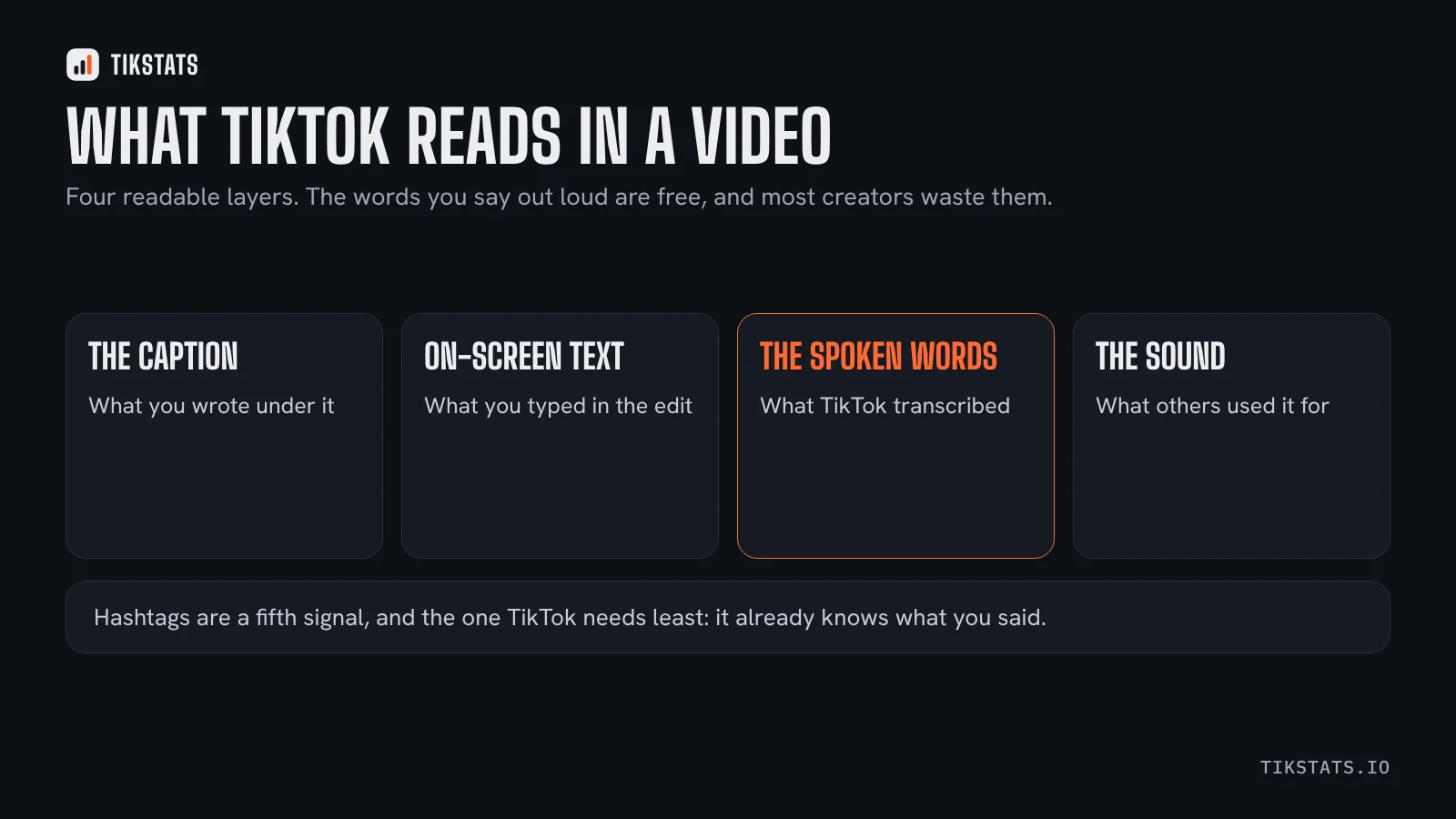
Four things carry the subject of a video, and only one of them is the hashtags:
- The caption you wrote.
- The text you put on screen in the edit.
- The words you said out loud, which TikTok transcribes into its automatic captions.
- The sound, and what other videos used it for.
The third one is the one people forget, and it is the most natural to use. You were going to speak anyway. Saying the subject plainly in the first sentence labels the video and hooks the viewer at the same time.
Check what TikTok heard, not what you said
Automatic captions are a transcription, which means they are an interpretation. If you mumbled the key term, or music covered it, the word TikTok indexed is not the word you meant.
This is checkable in seconds on any public video, including your own. Paste the link on the transcript page and read what came out, or use the Chrome extension to see it on the video itself.
People are regularly surprised. A video about “freelance invoicing” that transcribes as “free lance in voicing” is not going to be found by anyone searching for it.
Write for a question, not for a feed
Scroll traffic and search traffic want different openings. A scroller has to be interrupted; a searcher has to be reassured they are in the right place.
The practical compromise: name the subject in the first sentence, then deliver. “Here is how to clean a loud laptop fan” works for both, because it interrupts with a promise and matches a typed query.
The same applies to the caption. One clear sentence containing the words someone would actually type beats a line of tags, which this article goes into.
Study what competitors said, not what they tagged
The fastest way to find the vocabulary of a niche is to read the transcripts of the videos that already rank for it. Search the term on TikTok, take the top five results, and get the text of each.
You will see the same phrases recurring, and they are often not the phrases you would have chosen. That is the vocabulary your audience uses, and it is worth more than any keyword tool.
This article uses the same method for openings, and the two go together: the hook catches the scroller, the vocabulary catches the searcher.
What search traffic is worth
A video found through search keeps being found. That changes the arithmetic of making it: a tutorial that answers a question people type is worth more over six months than a trend video worth more in its first day.
It also changes how you measure. For search-driven videos, views per hour in the first day understates them badly, because the traffic arrives later. This article explains where velocity helps and where it misleads.
A reasonable split: trend videos for reach, search videos for the long tail, and the same transcript workflow feeding both.
Frequently asked questions
Does TikTok work as a search engine?
A growing share of use is people typing questions into the search bar. Those viewers arrive with intent and can find a video long after it was posted.
What does TikTok read to know a video's subject?
The caption, the on-screen text, the words you speak, which it transcribes, and the sound used. Hashtags are one signal among these, not the main one.
How do I check what TikTok transcribed from my video?
Open the video's transcript. If a key term came out wrong, the word TikTok indexed is not the word you meant.