Every TikTok metric, in plain words
· 7 min read
Half the confusion about TikTok numbers comes from two words meaning the same thing and one word meaning two things. This page fixes the vocabulary.
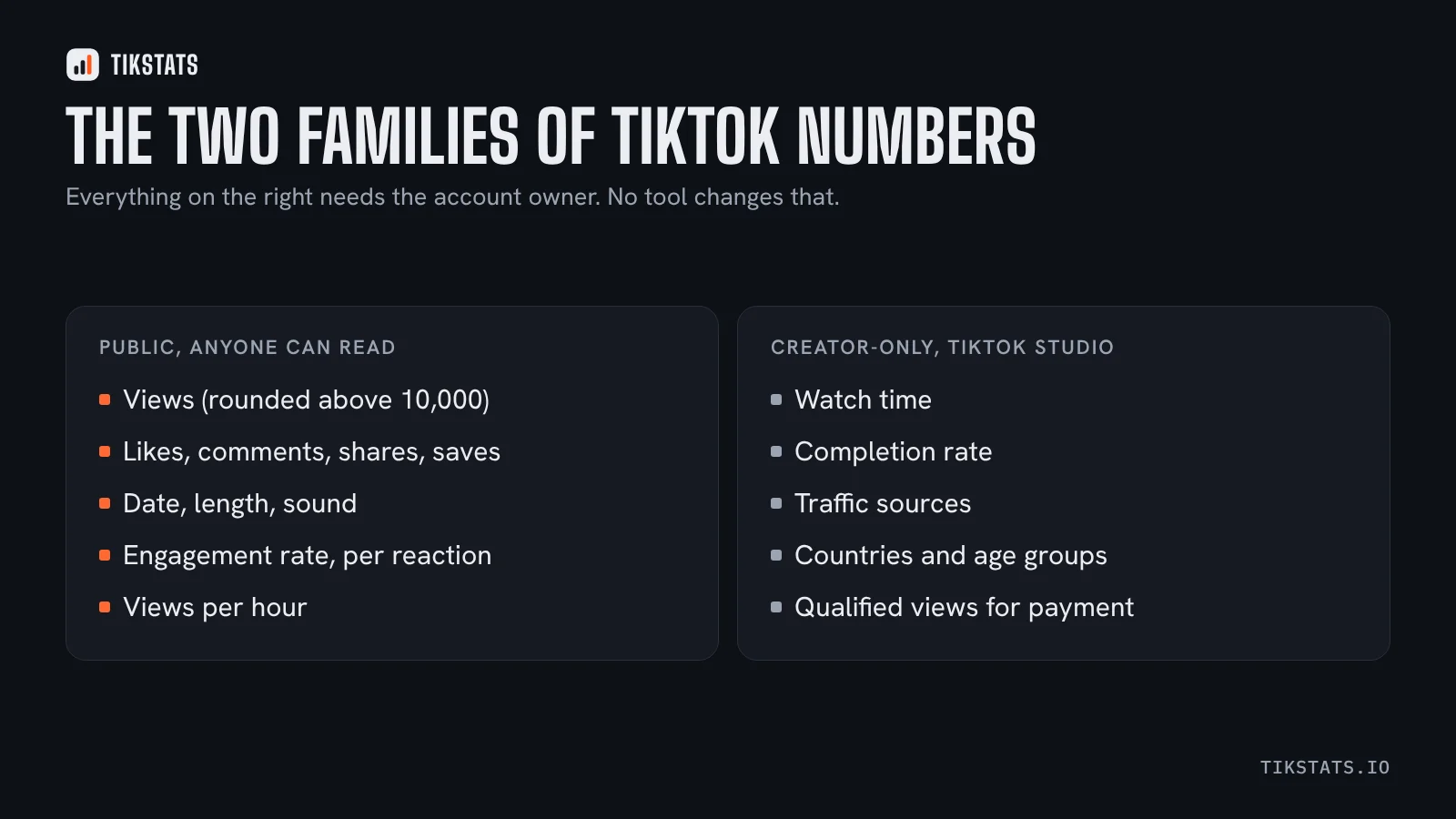
Public numbers: anyone can read these
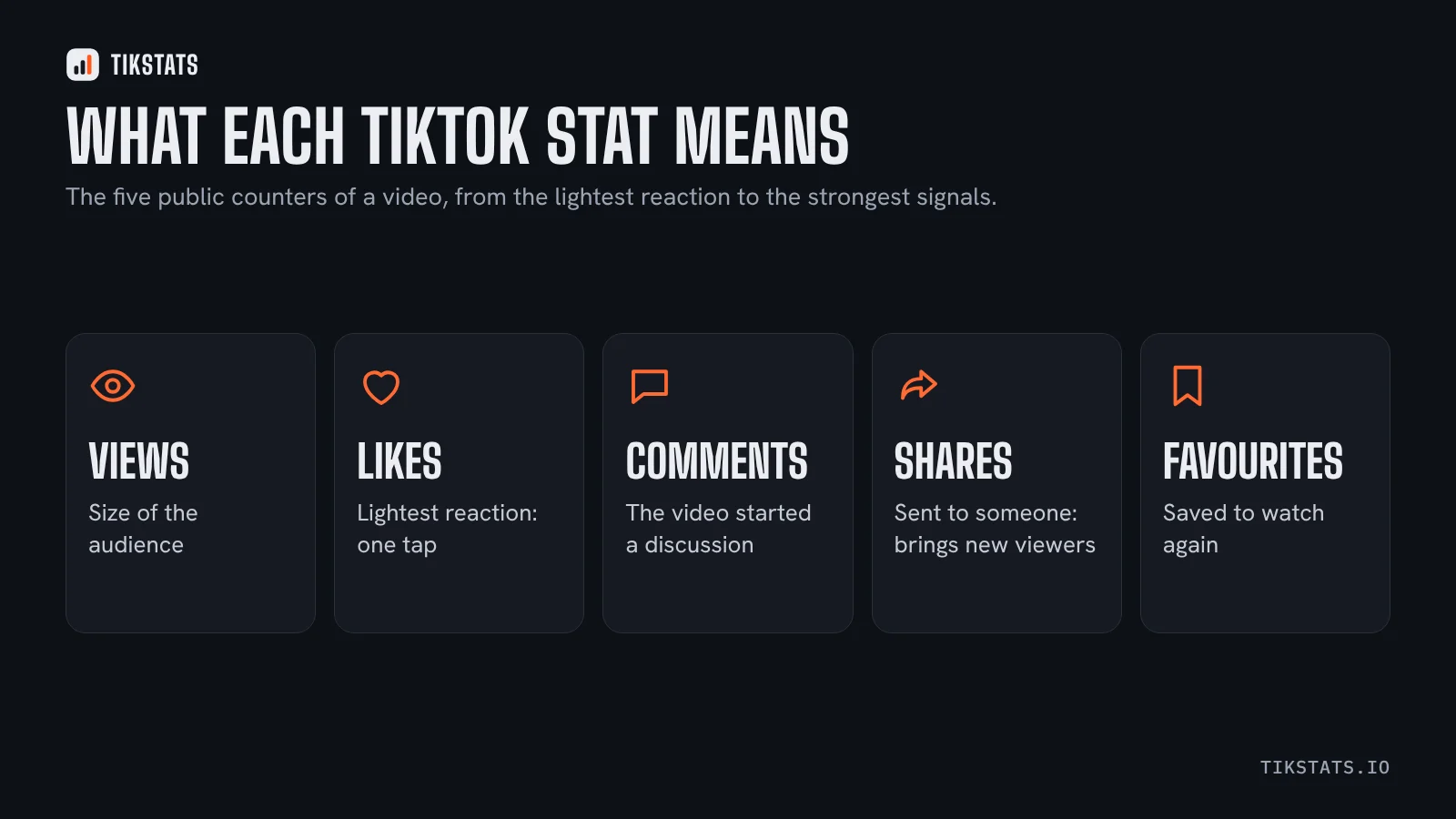
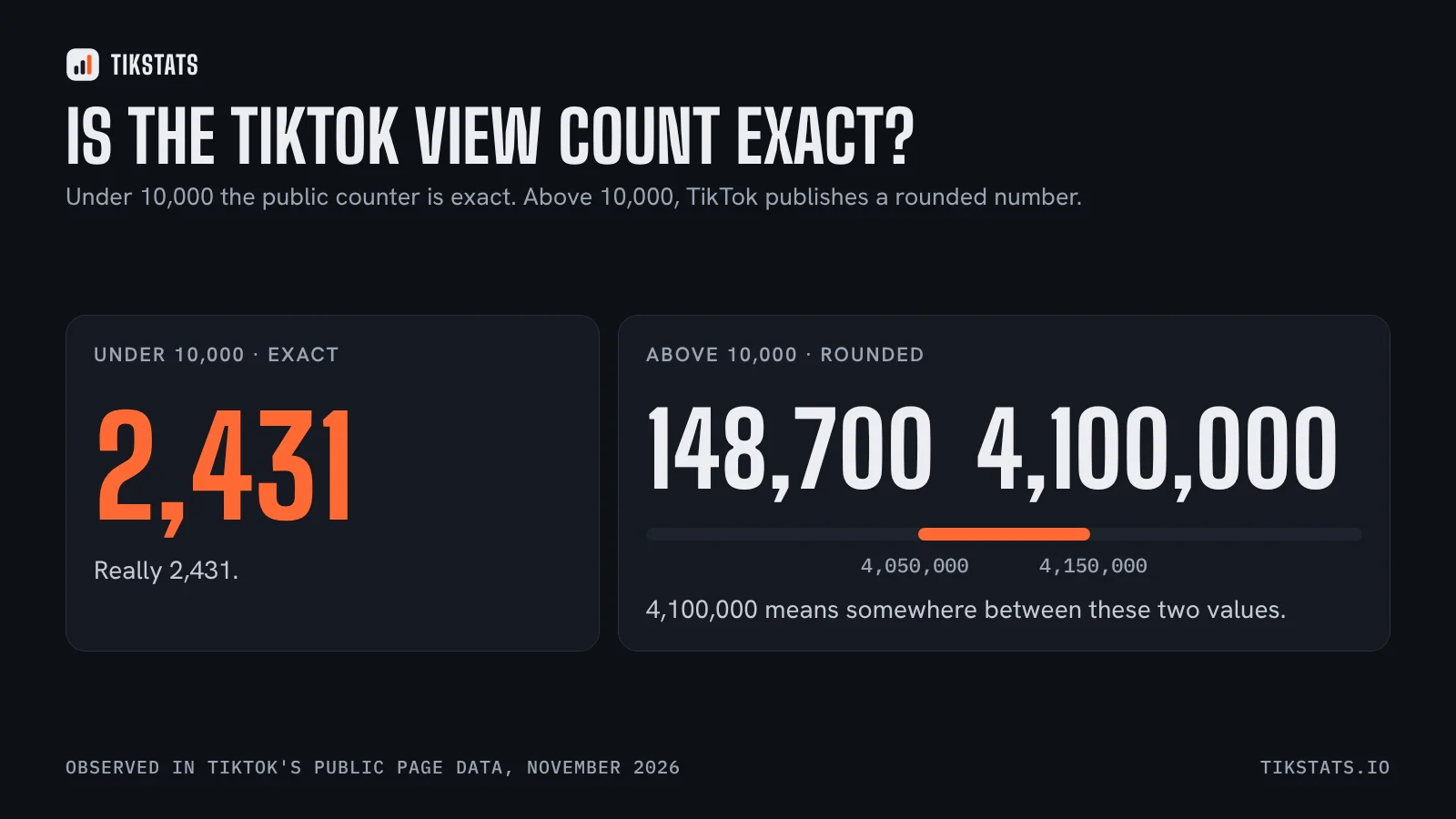
- Views: how many times the video was played. Rounded by TikTok above 10,000, so a video shown as 4.1M sits somewhere in a 100,000-wide band. More on the rounding.
- Likes: the lightest reaction, one tap.
- Comments: someone wrote something. Quality varies enormously, so read them rather than counting them.
- Shares: the video was sent to someone or reposted. The reaction that brings new viewers.
- Favourites, also called saves: the viewer kept it to find again.
- Posting date, length, sound: context that makes the rest readable.
Calculated from public numbers
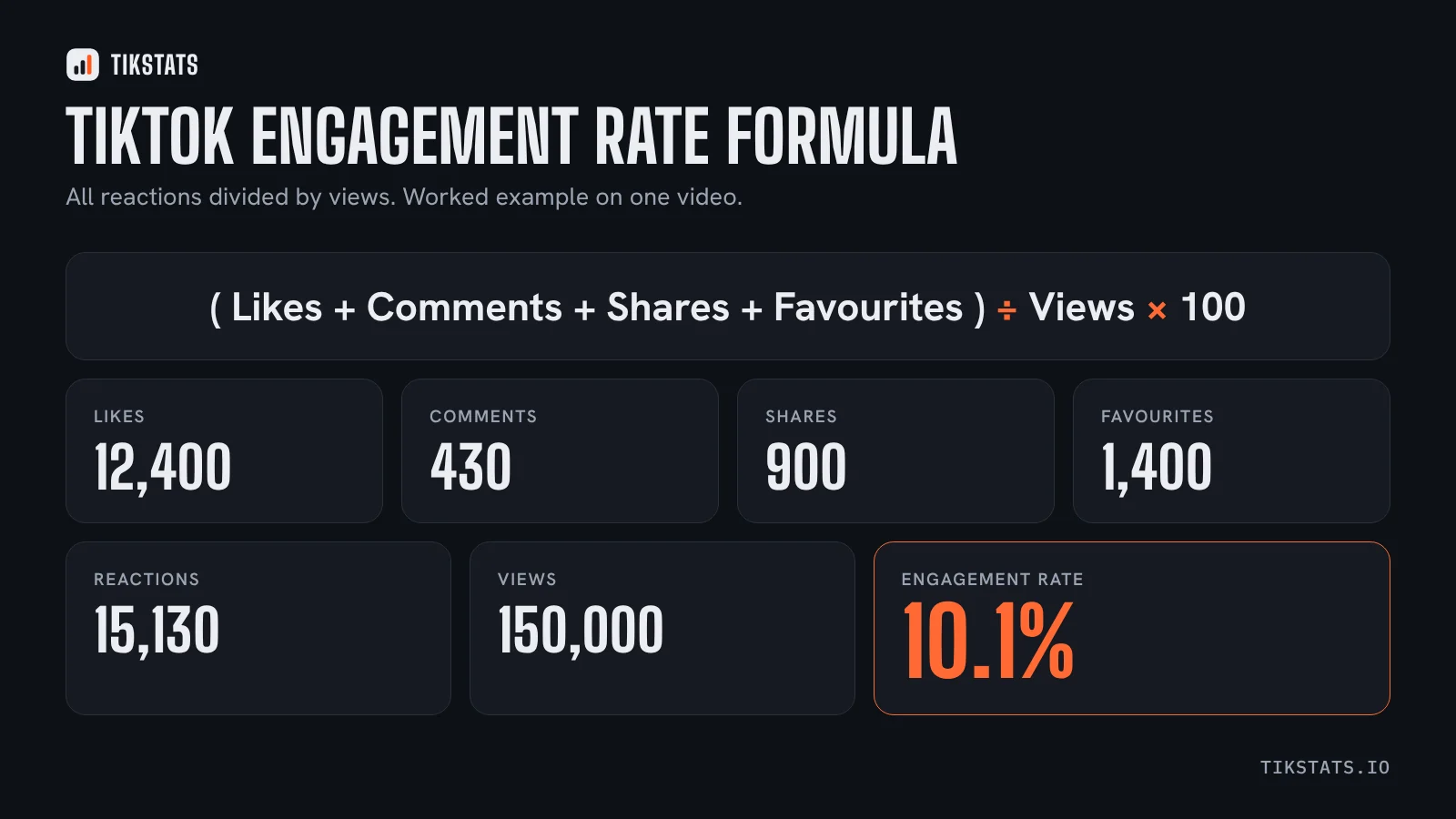
- Engagement rate: (likes + comments + shares + saves) ÷ views × 100. The standard way to compare videos of different sizes. Full explanation.
- Rate per reaction: the same division done one reaction at a time. More useful than the total, because each reaction answers a different question. Which lever moves which.
- Views per hour, or velocity: views divided by hours since posting. Shows how a video started rather than where it ended. Full explanation.
- Likes to followers ratio: a rough check on whether an audience is alive. Useful when vetting a creator, as this article covers.
Note the trap: because views are rounded above 10,000, every rate calculated from them inherits that rounding. The engagement rate of a large video is a very close estimate, not an exact figure.
Creator-only, in TikTok Studio
- Watch time: how long people actually watched. The strongest signal TikTok describes, and invisible from outside.
- Completion rate: the share of viewers who reached the end.
- Traffic sources: how people arrived, For You feed, search, profile, following.
- Audience demographics: countries, age groups.
- Follower activity: the hours your followers are online, which settles the posting-time question that this article raises.
No outside tool, free or paid, can read these. Why that line exists.
Monetisation vocabulary
- Qualified views: the views TikTok counts for payment under Creator Rewards. Fewer than the public counter, sometimes much fewer.
- RPM: revenue per thousand views. TikTok publishes none, so every figure in circulation is creator-reported. What creators report.
- Eligible video: for Creator Rewards, one longer than a minute, on an account meeting the thresholds. Why length is a money decision.
Words that get mixed up
- Favourites and saves are the same thing, named differently in different places.
- Engagement rate by views and engagement rate by followers are different numbers. On TikTok the first is the useful one, because most views do not come from followers.
- Reach and views are not the same on every platform, but TikTok's public counter is plays, not unique people.
- Velocity and virality are not the same. Velocity is measured; virality is a story told afterwards.
To work any of these out on a real video, paste a link on the home page, or put the panel on TikTok itself with the Chrome extension.
See these numbers on a real video
Frequently asked questions
What is the difference between favourites and saves on TikTok?
Nothing. They are the same action, named differently in different places.
Is engagement rate calculated on views or followers?
On TikTok, by views. Most views come from the For You feed rather than from followers, so dividing by followers measures the wrong thing.
What is a qualified view?
A view that counts for payment under Creator Rewards. There are fewer of them than the public view counter shows.